October 9, 2010

UK, 1815 : Bollman's Coinage Idea

1814: 1 Troy Oz. platina (whols.) = £ 0.15 - 0.20 (USD$ 0.478 - 0.638)
1814: 1 Troy Oz. Platinum (retail?) = £ 1.25 - 1.75 (USD$ 3.99 - 5.58)

February, 1814:
Citation: Encyclopaedia Londinensis, or, Universal dictionary of arts ..., Vol. 15 (1817) p.480


1815: W.S. Jones Catalogue addendum, dated

Citation: An analysis of the principles of natural philosophy ; Matthew Young (Bishop of Clonfert), p.464

In an 1815 letter, Dr. Bollman's hypothetical $1 and $2.5 US coin are mentioned. An number of London bank tokens were coined.

The idea for Platinum coinage persisted in several nations: mules were even struck.

At the market-rate of £ 0.15, it would have been impossible for any nation to furnish The United Kingdom £ 200,000 or 41,460 kilograms of the metal, annually.


Citation: The domestic encyclopedia: or, A dictionary of facts and useful ..., Vol. 1 ; Anthony Willich, Thomas Cooper pp.498-500

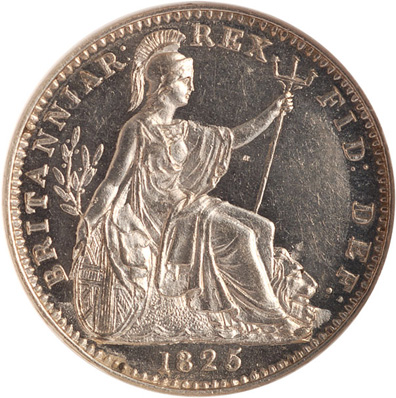
US Mint Collection, 1815 mule: example of Bollman's coin, perhaps the $2.50 piece, referenced by John Quincy Adams.

The actual 1815 US Silver Half-Dollar weighed ~208 grains (13.48 grams) and the alloy (89.2% Ag and 10.8% Cu) should have an estimated specific gravity of 10.293. Assuming the specific gravity for pure Pt (21.51), a coin struck to the same dimensions at purity should have weighed 434 grains Troy, or .906 Troy Ounce.  

At 0.7181 Troy Ounce, the intrinsic value of the actual Platinum coin (@ "USD$ 3./oz" in 1813/4) was $2.1544

Weight: 344.7 Grains Troy
Specific gravity: 20.9
Diameter: 32.6 mm.
1860: 1 Troy Oz. Platinum (intrinsic) = USD$ 7.6588

Citation: A description of ancient and modern coins: in the cabinet collection at the United States Mint; Bureau of the Mint, James Ross Snowden (1860)


Liverpool: August 1815?  Dollar value drops by ~20% on ship rumor of abundant USD$ notes!


October 8, 2010

USA, 1840: US Mint Price's Estimated Price

Several later sources cite this price for what is clearly worked platinum.  This particular authority is the Mint assayer, but the basis for this price estimation is unclear: coin rate or semi-refined ingot?

c.1840: 1 Troy Ounce Platinum (imported? market) = $ 6.80
c.1841: 1 Troy Ounce platina (ore) = $ 4.39

The Price of Platinum in the USA was falling in the 1840s.

Citation: A manual of gold and silver coins of all nations struck within the past... By Jacob Eckfeldt (1842) p.111


The isolation of the other Platinum Group Metals was still novel; "purity"claims before this date is therefore highly suspect.  Commercial articles for sale may be supposed impure, through the 19th Century.

c.1840


1840: Philadelphia
Chemical Apparatus in Laboratory, viz: — Pnematic trough, and hydrogen oxygen blow pipes; 1 large and 
1 small chemical furnaces; 2 gasstoves, table blow pipe, platinum crucible; 4glass and 3 iron retorts; specific gravity apparatus for gas; glass tubes; test glasses; evaporating dishes; acids, and other chemicals; 2 mortars and pestles; 1 Argand lamp; photemeter case of drawers; small patent balances, etc. .... $100. 00

October 7, 2010

UK, 1876: Counterfeit Gold Coins


1876: 1 Troy Oz. Platinum (Mkt) = £ 0.7529

Citation: Report of Her Majesty's Commissioners for the Paris Universal Exhibition Vol.2 p.131


1876: 1 Troy Oz. Platinum (Intrinsic/Mkt) = £ 1.25

Citation: Chemist and Druggist: The Newsweekly for Pharmacy, Vol. 18 6/15/1876, p.183


1876: 1 Ozt. Platinum (Mfg, Retail) = £ 2.50 - 3.75 (USD$ 13.55 - 20.33)

1876: 1 Ozt. platina (London, commercial) ~ £ 1.03 (USD$ 5.57)
1876: 1 Ozt. platina (85%, global mkt?) ~ £ 0.85 (USD$ 4.75)
1876: 1 Ozt. Platinum (intrinsic) ~ £ 1.00 (USD$ 5.59)

1876: 1 Ozt. Standard Gold = £ 3.8938 (USD$ 21.77)
1876: 1 Ozt. Pure Gold = £ 4.2458 (USD$ 23.)


c.1870-6:
Citation: The Bankers' magazine, Vol. 36 (1876) p.1003

As reported in April 1876, the estimated manufactured cost of a Gold-plated Platinum coin was 28% the Gold rate, or 1:3.57 Gold/Platinum.  If the swindle involved aforementioned Franc counterfeits, and adjusting standard Gold to ~.945 Platinum with alloy:

~30,888 Troy Ounces of Counterfeit metal = 29,189 Troy Ounces Pure Platinum
£ 120,000. @ £ 4.2458 = ~ 28,263 English Troy Ounces Pure Gold
£ 33,600. @ £ 1.15 = ~ 29,189 English Troy Ounces Platinum

1876: 1 Troy Oz. Platinum (Spanish counterfeit, intrinsic) = £ 1.15
..... Per Troy Oz. Pt (Spanish mfg COST) = £ 0.15
..... Estimated ancillary costs, to all accomplices ~ £ 1.00

Citation: Reports from Her Majesty's consuls on the manufactures, commerce ..., Vol. 19; Foreign Office, p. 1621


By the 1890s, counterfeit Gold in Platinum was scarcely 0.001% of the total Gold coinage.

Citation: The Economist, Vol. 49, Pt 2, 8/8/1891, p.1016

October 6, 2010

Russia, 1840

From 1828, the Russian price for refined Platinum collapsed profoundly by 1840, in Silver value from 5:1 to about 2:1. (The same valuation for ore appears in a 1842 US article : "in large quantities it would be worth twice as much as Silver.")

Several
unknown factors must explain this extraordinary event, unrecorded and poorly understood even today.

c.1840?:
Citation: Revelations of Russia: or The Emperor Nicholas and his empire, in 1844, Vol. 2 By Charles Frederick Henningsen (1844) p.275


c.1844


Peak production of Platinum in the early 1840s was likely related to the falling price. Also, Bonolli's massive importation (of Colombian ore, from Cartagena) to Europe probably coincided with Demidoff's gargantuan Russian export in 1840. By this perhaps not coincident oversupply, the market-price for Russian ore suddenly and briefly collapsed.


1880s
 

c.1825: 1 Troy Ounce Platinum (coined, Russian rate) = £ 1.43 ($USD 5.15)
1844: 1 Troy Oz. Platinum ("about 2x Ag: £ 0.2976") ~ £ 0.5951 ($USD )
c.1844: 1 Troy Oz. Platinum (Russian mkt value) = £ 0.23 ($USD 0.83)

Dated information, 1847: James Abbott was in Orenburg in June 1840, in St.Peterburg by August 1840. Platinum Coin was then supposed to be about half the Gold-Coin, but the Platinum Rouble was well-known to be discounted.


Improved technology (cheaper refining methods) also reduced Platinum prices dramatically; this comment presumably refers only to refining-cost parity, yet reads dramatically to imply a par-value with Silver.


1840:


But the British manufactured market price was firm, as manufacturers eagerly absorbed cheap platina for new uses & demands. (See Grove's Battery.)

1805: 1 Troy Ounce Platinum (refined) = £ 0.88 ($USD 3.83)
c.1835: 1 Troy Ounce Platinum (mfg, retail? See Davy.) ~ £ 1.80 (USD$ 8.73)

Citation: Journal of the Chemical Society: Transactions, Vol. 77 By Chemical Society (1900) p.578


Russian estimation of Davy's Battery: £600. ?


Jacobi's Grove's Battery, 1840:
 

Platinum was ~ 17 - 18% of the Gold Yield (excluding old Gold Coin, etc.)

1839 Platina Yield: 91.9123 Poud = 3,676.5 Funt = 48,405 Ozt. = 1,505.5 Kgs.  

1840: Platina Yield: 94 Poud = 3,760 Funt = 49,505 Ozt. = 1,539.77 Kgs.
1840: Gold Yield: 551 Poud = 22,040 Funt = 290,181 Ozt. = 9,025.65 Kgs.
1840: Gold Yield: 534 Poud = 3,760 Funt = 281,227.2 Ozt. = 8,747.14 Kgs.


Gold Yield, 1824 - 1848:
 

Platinum 2x Silver 
Citation: Archiv für Natur, Kunst, Wissenschaft und Leben (No.2, March 1841) , p.22
 

UK, 1805: First Platinum Still, and Platina Prices

One of the earliest English references to its use is the record of the Prince of Wales' (later, Geo. IV) purchase of a 'platina' watch chain in 1805.


Workmanship, from Wollaston's Notebooks, pay be assumed a small charge over the flat manufactured rate indicated: £ 0.875/Ozt. Thomas cock estimated the "crucible &rolling" charge at 8d.; here, not more than 6d.

1805: 1 Troy Oz. Platinum (Ingot: Semi-Mfg, Ret.) = £ 0.75 (USD$ 3.33)
1805: 1 Troy Oz. Platinum (Wire: Semi-Mfg, Ret.) = £ 0.80 (USD$ 3.55)
1805: 1 Troy Oz. Platinum (Mfg, Ret.) ~ £ 0.90 (USD$ 4.)

Citation: The Philosophical Magazine: Comprehending the Various Branches..., Vol. 21, No. 83 (April 1805)  p.297


In 1805, Henry Hyde Wollaston made a concentrating still holding 30 wine gallons (114 litres) or 300 lbs oil of vitriol for Philip Sandmann (Sandemann.); this still was reportedly re-sold to Charles Tennant of the St. Rollox Works. 

The total weight was 406.5 Troy Ounces and cost £ 282 9s, or 13s. 10d./Ozt.  The manufacture was by Chas. Sylvester for ~£ 50.1; the net bulk price of Platinum Sheet was 11s. 5.2 d.  

1803: 1 Troy Oz. platina (Cartagena: Contraband, 75% Ore) = £ 0.1065
1803: 1 Troy Oz. Pt .999 (Cartagena: Intrinsic) = £ 0.142
1804/5: 1 Troy Ounce platina (UK: ore, trade) = £ 0.2468
1804/5: 1 Troy Oz. Pt (UK: intrinsic) = £ 0.3751
1804/5: 1 Troy Oz. Pt (UK: Refining Cost) = £ 0.4452
1804/5: 1 Troy Oz. Platinum (UK: Small Producer First Base Cost) = £ 0.82

1805: 1 Troy Oz. Pt (Paris: French Refined First Base Price) = £ 0.9717
1805: 1 Troy Oz. Platinum (Paris: Mfg First Base Price) = £ 1.215

1805: 1 Troy Oz. Platinum (UK: Sheet)  = £ 0.57183
1805: 1 Troy Oz. Pt UK Manufacture = £ 0.123
1805: 1 Troy Oz. Platinum (UK: mfg., bulk)  = £ 0.6947

As reported in 1814 ("many years" = 9 years) this still remained in use; Wollaston's notebook indicated the weight was 356 Ozt, 50.5 Ozt lighter, losing about -5 Ozt per year. 


The approximate amount of refined Platinum by weight per Litre was (dubiously) 3.58 Troy Ounces; the amount of Litres contained per Troy Ounce was 0.293 Litres.  Exceedingly economical, if correct.


From 1805 - 1830, the UK price of refined Platinum rose 50%:  £ 0.75 > 1.25.

1806: 1 Troy Ounce platina (ore, retail)  = £ 0.2743

1805: 1 Troy Oz. Silver = £ 0.2583 
1805: 1 Troy Oz. Platinum (refined, retail)  = £ 0.75 (USD$ 3.26)
1805: 1 Troy Oz. Platinum (manufactured, bulk)  = £ 0.6947


1815/6: 1 Troy Oz. Platinum (refined, retail)  = £ 1.05 (USD$ 3.26)

Citation: A dictionary of chemistry and mineralogy , with an account of the ..., Vol. 1, Arthur Aikin et al. (1807) p.118

Two years later, Richard Knight paid about the half the original retail price

1805: 1 Troy Oz. Palladium (Trade, Knight: 0.8935) = £ 12.60 (USD$ )
1805: 1 Troy Oz. Palladium (.999)  = £ 26.86 (USD$ )
 
"As early as July 20th 1805 Richard Knight purchased one ounce of palladium for twelve guineas and promptly wrote to Nicholson who included in the August issue of his Journal the following notice: “ By a letter from Messrs Knight of Foster Lane I am informed that the new metal, palladium, may be purchased at their warehouse” (49)."

c.1804: Thom. Cock's Platinum


USA, 1863: 3 Rouble Coin?


Among the cheapest coins in this 1863 catalogue, the Quarter Eagle ($2.50) was officially $20.69/oz by gold weight; here, $34.10/oz. as a numismatic collectible over the Gold Rate.  

Final sale price are unknown, but at these Gold rates (x 1.52) in Greenbacks, the total premium was at least 150% over face-value.


This Platinum coin, presumably a Three-Rouble, was effectively rated as scrap at $3.10/oz troy.  Another later source recalls the period scrap rate for Platinum (early 1860s) was USD$ 3. or less.


1863: 1 Troy Oz. Platinum (UK: Intrinsic)  ~ $ 5.89/ USD$ 10. (£ 1.21)
1863: 1 Ozt. Platinum (France: Mfg, Bulk Retail) = $9.; USD$ 15.30 (Fr 46.66)


1863: 1 Ozt. Platinum (Rouble coin; intrinsic value)  = $ 3.10
1863: 1 Ozt. Platinum (Scrap, Estimate)  = $ 3.00/ USD$ 4.25
1863: 1 Ozt. Platinum (Manufactured, Whols.)  = $ 6.25/ USD$ 9.08


Bangs, Merwin & Co. auction 5/1/1863


Citation: Bulletin of photography: the weekly magazine for ..., Vol. 10; Vol.230-255 p.861
 

Counterfeit Eagles:

Where 2 Eagles should weigh 1.075 Ozt (£ 4.10), it was assumed the counterfeiter keeps  0.8248 Ozt Fine Au, extraordinarily high yield.
 
 
Citation: Scientific American, Vol. 9 (July 4, 1863) p.21


Taking the $10 Eagle at 0.5373 Ozt valued at £ 2.05, the counterfeit Eagle (reduced $4.66 = USD$ 6.75: ~0.25 Ozt) was worth ~$5.34/ USD 7.75 (0.25.86 Ozt, Fine Au); the platina filling (~0.25 Ozt) was estimated worth $ 1.00.  It's not clear if the "platina" were the 66% Pt/ 34% Ag alloy; if so, Specific Gravity of the Coin should be lower: 16.61 instead of 17.32.

c.1863: 1 Ozt. platina (Whols.) = USD$ 4.

Counterfeit Platinum Eagles, 1862:


April, 1863: 1 Troy Ounce Silver-Platinum Alloy (Dental Trade) ~ $ 7. ; USD$ 

April/May, 1863:
Citation: Dental News, Vol, 2, No.2 (June, 1863) p.


1862/3: